
Through the Looking Glass: Poems by Anna Cates.
(Resource Publications, 2026). 55 pp, $9 ebook or paperback. https://www.amazon.com/Through-Looking-Glass-Anna-Cates/dp/B0GKSVLHBT
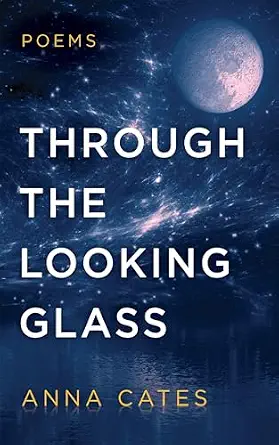
This book is currently an Elgin nominee. It contains mostly previously published SpecPo, that is mostly lightly and stealthily formal verse, all containing “the motif of the mirror”. The book is divided into four numbered but otherwise unlabeled sections. The sections address the following: One—Alice, both in Wonderland and Through the Looking Glass, Two—Snow White and related folk tales, Three—Dracula, Four—a potpourri. Finding the connecting line of the mirror through the first three fictions is a clever piece of high concept.
In the first section, the cast of the Alice books appear throughout, and many poems can be read as the experiences of adult Alice in the real world with a fantastical past. “Broken Pieces” is particularly striking as adult Alice undergoes a psychological evaluation in hopes of receiving foster children. “Before the days ends, I emphasize that it’s been well over twenty years since I’ve experienced any psychiatric problems”. This poem is not typical, as some are similarly serious, but few others depart so far from the fictional worlds of their birth. Perhaps this is more typical, “She planted a tree from the magical seeds of her mind, and it grew.” Many poems in this section begin with epigraphs of quotes from the Alice books.
The title poem drowns the reader in rarely encountered words including: montivagant, violaceous, catoprophobia, fanforanade, gorgonize, ktenology. That poem is the exception as most poems don’t dwell on such high vocabulary. That said, the readers will occasionally meet such words as vuliginous, uliginous, and fecund.
The section exploring Snow White works from early versions of the fairy tale rather than the sanitized modern versions. For example, the concluding envoy of the haibun “The Looking Glass: An Afterwards” reads:
better a mile
in ruby slippers …
red-hot iron shoes
referring to the ancient ending in which the evil stepmother is forced to dance to death while wearing those burning shoes.
The Dracula section addresses the looking glass directly in the first two poems, less directly thereafter.
a vampire’s face
through the looking glass
betrays no reflection—
living in shadow …
beyond moral judgement?
“Unnatural”
reflectionless “other”
unforgivable shadow
Nosferatu
“Count Orlock”
The last section exploring various fictions covers many tropes. It begins with the “Bride of Frankenstein” whose “eye pop / in the looking glass— / scars and bandages”. It moves on to Rumpelstiltskin, The Goblin Market, Lear, Perseus, crocodile tears, and curiously a triptych of science fiction poems. This is a rich collection set largely in worlds of fable, and is a prize for those who like such things.
—Herb Kauderer