As this part of the history of speculative poetry will show, many of the ‘monsters’ represented in horror poetry were originally codified into Western culture by the Bible: including Satan, demons/devils, dragons, the Leviathan, witches and more. Indeed, many consider the Bible to be a ‘spell book’ that contains the chants, verses and incantations that specifically protect us against such monsters, their malign influence and possession. And it is, apparently, an increasing number of us that believe in both the supernatural threat and the power of the Biblical form of poetry or song, since polls run by both Gallup and the data firm YouGov over a number of decades indicate a rising belief (up to 50% of Americans) in demonic possession. The percentage who believe in Satan is even higher, Gallup polls reporting 55% in 1990 but then 70% in 2007. Pope Francis himself personally conducted an exorcism, and in 2018 convened an exorcism workshop in the Vatican that was attended by 250 priests from 51 countries. In such a context, it can be no surprise that ‘horror poetry’ continues to be so popular (and have so devout an audience) within wider speculative poetry, for it concerns itself with threats and dangers that are – for some – all too real.
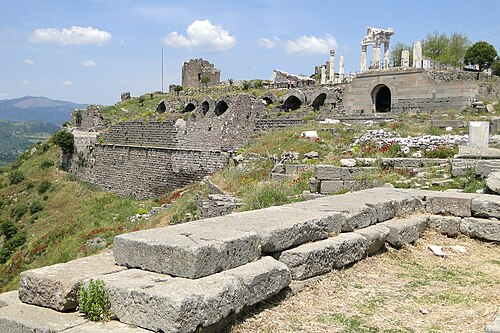
The Book of Revelation is explicit ‘Satan live[d]’ and had ‘his throne’ in the Greek city of Pergamon (now in modern eastern Turkey), a city which both worshipped a multiplicity of older Greco-Roman and Egyptian gods and also provided the site of one of Christianity’s seven major churches in Asia Minor. However, come 92CE, the city’s Christian priest named Antipas was roasted to death in the Brazen Bull by pagan priests for refusing to declare the Roman emperor as ‘lord and god’ above all.
It is thus that Jesus instructs John of Patmos:
To the angel of the church in Pergamon write:
These are the words of him who has the sharp, double-edged sword. I know where you live – where Satan has his throne. Yet you remain true to my name. You did not renounce your faith in me, not even in the days of Antipas, my faithful witness, who was put to death in your city – where Satan lives. (Revelation 2: 12-13)
With Pergamon ‘demonised’ as the home of Satan, its temples described as Satan’s throne, and the murderous attack on the priest of Christianity representing the action by which the devil ‘lives’, Satan becomes the personification of all pagan or non-Christian religions and all physical and political attacks upon Christianity. He is synonymous with bloody sacrifice, scheming, false idols, lies, cunning tests, death and brutality, fire and screaming, the animalistic, and a struggle for dominance and dominion. It is not surprising, therefore, that his physical representation and description in the Bible is marked by the animals most commonly deified by the Greco-Roman and Egyptian temples of Pergamon: the horned bull and the winged serpent. The New Testament (NT) claims that the serpent in the Old Testament’s Garden of Eden is one of Satan’s avatars, and then he is variously described as ‘an enormous red dragon with seven heads and ten horns and seven crowns’, ‘a dragon that can spew water like a river’, ‘the beast’, one who can mark the heads and hands of his followers (666) and ‘a thorn in the flesh’.
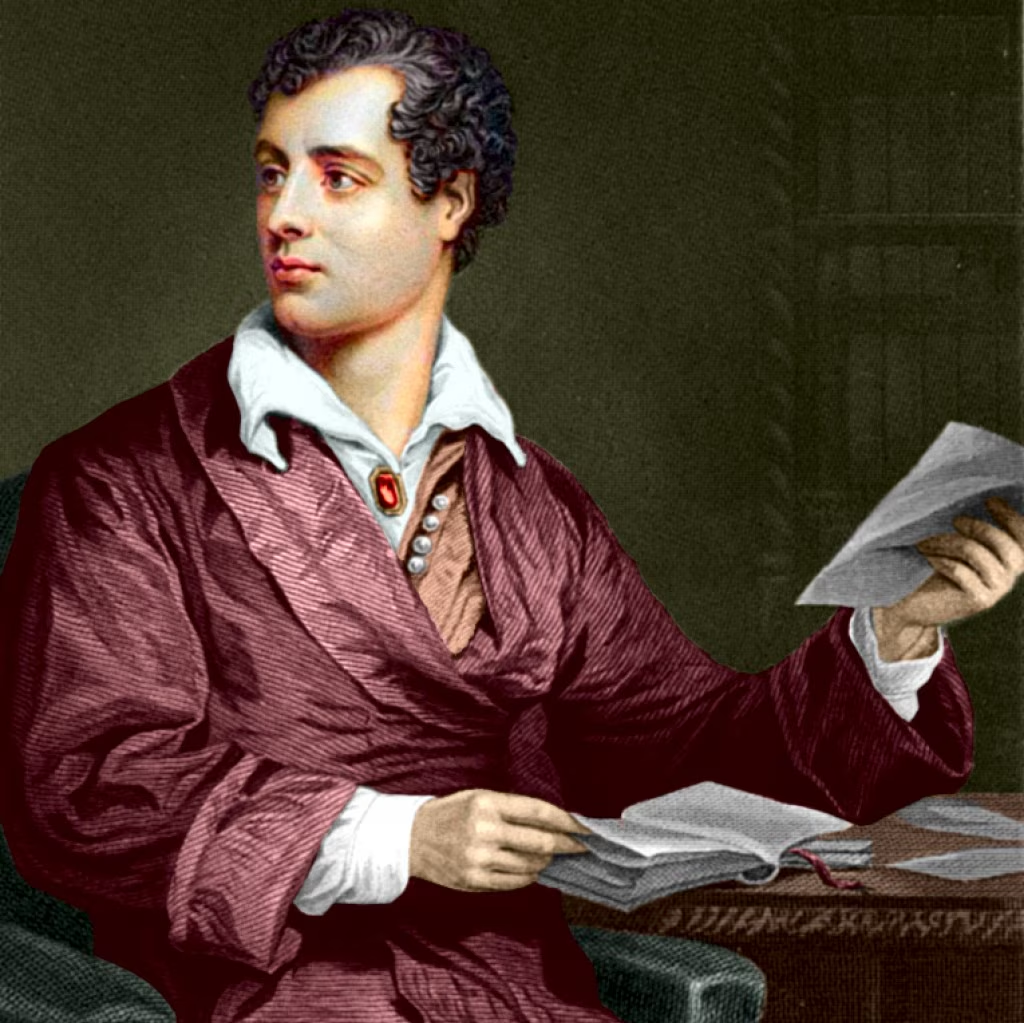
It is with the Bible, then, that we see the roots, or at least many of the motifs, of horror poetry (and perhaps also some fantasy poetry, Tolkien adopting and adapting the dragon of temptation and punishment from the allegorical poem of “Beowulf” for his 1937 novel The Hobbit)1. And those Satanic motifs and associated themes recur through millennia of dark poetry and verse, through The Canterbury Tales (c.1387-1400) of Chaucer, the Dark Lord and his agents appearing or possessing others in at least seven tales2, to Marlowe’s verse-based play Doctor Faustus (c.1588-93), to Milton’s Paradise Lost (1667), to Byron’s superb speculative horror poem “Darkness” (1816), to name but a few. The latter poem is an apocalyptic vision of the sun and stars going out, the resulting chaos and despair amongst humankind bringing about the end of days. I would urge you to read the entire poem, but I’ll quote a latter section here:
[…]The crowd was famish’d by degrees; but two / Of an enormous city did survive, And they were enemies: they met beside / The dying embers of an altar-place Where had been heap'd a mass of holy things / For an unholy usage; they rak'd up, And shivering scrap'd with their cold skeleton hands / The feeble ashes, and their feeble breath / Blew for a little life, and made a flame / Which was a mockery; then they lifted up / Their eyes as it grew lighter, and beheld / Each other's aspects—saw, and shriek'd, and died— / Even of their mutual hideousness they died, / Unknowing who he was upon whose brow / Famine had written Fiend. The world was void, / The populous and the powerful was a lump, / Seasonless, herbless, treeless, manless, lifeless— / A lump of death—a chaos of hard clay. / The rivers, lakes and ocean all stood still, / And nothing stirr'd within their silent depths; / Ships sailorless lay rotting on the sea, / And their masts fell down piecemeal: as they dropp'd / They slept on the abyss without a surge— / The waves were dead; the tides were in their grave, The moon, their mistress, had expir'd before; / The winds were wither'd in the stagnant air, / And the clouds perish'd; Darkness had no need / Of aid from them—She was the Universe.
It is with Byron, of course, that the vampire-monster is popularised in English literature, Byron’s 1813 poem “The Giaour”, along with a related tale, inspiring Polidori’s 1819 short story “The Vampyre” (in which Polidori jealously satirises Byron’s predatory womanising)3. Byron actually appropriated the vampire from both the German/Austro-Hungarian poetic vampire tradition that went back to c.15 (with the poem “Story of a Bloodthirsty Madman Called Dracula of Wallachia”) and an equally old Turkish Ottoman tradition that harked back to c.15 ‘vampire fatwas’, the title of Byron’s “The Giaour” poem being an offensive Turkish word for infidel or non-believer.
But first, on earth as Vampire sent,
Thy corse shall from its tomb be rent:
Then ghastly haunt thy native place,
And suck the blood of all thy race;
There from thy daughter, sister, wife,
At midnight drain the stream of life;
Yet loathe the banquet which perforce
Must feed thy livid living corse:
Thy victims ere they yet expire
Shall know the demon for their sire,
As cursing thee, thou cursing them,
Thy flowers are wither'd on the stem.
But one that for thy crime must fall,
The youngest, most beloved of all,
Shall bless thee with a, father's name —
	That word shall wrap thy heart in flame!
It is important to detect in both the (New Testament) Satanic and the vampiric poetry traditions that the monsters directly serve to demonise the malign threat of the non-Christian 'other', the outsider or invasive foreigner to the community3, in order then to appreciate that Polidori’s short story actually shifts the dynamic so that it instead demonises the morally corrupt, seductive but parasitic upper classes of society. Such a move is significant as it aligns itself with the largely contemporaneous emergence of the British Gothic tradition.
2 The Gothic
The British Gothic began with Walpole’s novel The Castle of Otranto (1764), that novel sub-titled ‘A Gothic Story’ and the first novel to claim such a label for itself. It is full of portentous dreams, the animated dead, bloody visions, secret passageways, the surreal and romance. It tells the story of Manfred, the lord of the castle of Otranto, whose son (Conrad) dies on his wedding day when a six-foot helmet crushes him. Ignoring the ominous nature of the death and a prophecy that his family will lose the lordship, Manfred resolves to give over his own wife so that he might have the young bride-to-be (Isabella) for himself and thereby secure the family line. Unwilling as she is, Isabella flees the now monstrous and cruel Manfred. Manfred’s determination and appetites apparently end up undoing the natural order of things (bringing disorder to the inner mind and its experience of the external world), his family, relations with the neighbouring kingdom and his own lordship. Like Satan in Paradise Lost, then, Manfred is the anti-hero who drives the plot forward, sacrificing whatever is necessary, but eventually failing. Therefore, although Satan has now been replaced in the narrative by an entirely human character, and although there is an attempt to turn away from traditional religious strictures, the narrative stubbornly remains within a religious framework of symbolism, judgement and moral lesson. In this sense, The Castle of Otranto, for all that it is the first Gothic novel, with a new or ‘novel’ style (mixing the ancient and modern styles of romance, with resulting discordant moments and horror elements) and containing ‘novelty’ (as described in Walpole’s preface to the second edition), does not fully manage to transgress or step beyond the limits of a traditional allegory or morality play. What it does do, however, is offer a step in the ‘right direction’, a brief lifting of the veil, a glimpse of the forbidden, a new creative potential and elusive promise of, if not transcendence then transition to, an altered state and future.
For all its potential and for all its suggestion that through force of will Man might be able to transcend the lowly position of his birth or the limitations of his place in the world, The Castle of Otranto ultimately asserts the natural and moral order of God’s creation. Manfred is punished for his over-reaching ambition when, in a moment of mistaken identity, he murders his own daughter. Seeing the horror of what he has done, he repents and vows to lead a good and religious life with his wife from that day onwards. There is also an all but out-of-the-blue moment of deus ex machina when the ghost of the long-since martyred but rightful heir to the castle of Otranto (Prince Alfonso, killed before the dramatic events of the book) appears and declares the previously anonymous Theodore’s right of succession. Theodore marries Isabella, the princess of the neighbouring kingdom, takes over the rulership of Otranto and brings peace to all. The tropes of romance and a Shakespearean ‘comedy’ (melodrama) thereby win out over the Satanic tropes of horror.
From the above, we can see that the British Gothic, then, involves romance, death, the supernatural, corrupt and exploitative upper classes, the religious and (as per the dynamic of Divine Right) an ominous and unholy disruption of the natural world’s order (God’s creation), the drama usually taking place in a symbolically ‘haunted’ mansion / castle or eerie landscape.
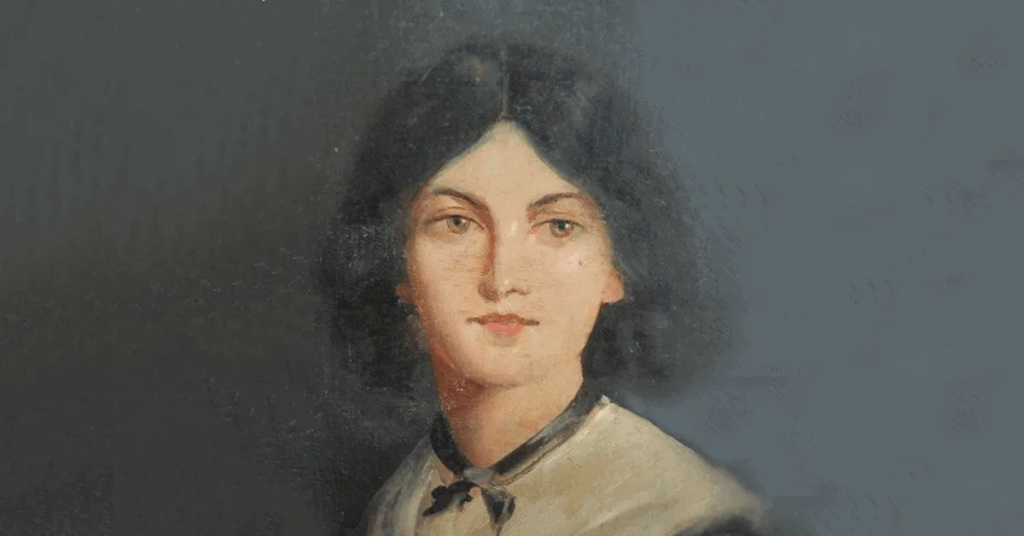
Such motifs and themes inform a poetic tradition that was taken forward by both male and female writers, Emily Bronte (who wrote the classic 1846 Gothic novel Wuthering Heights) producing a great deal of Gothic poetry including the likes of “The Night Is Darkening Around Me”, also known as “Spellbound” (1837).
The night is darkening round me,
The wild winds coldly blow;
But a tyrant spell has bound me,
And I cannot, cannot go.

The giant trees are bending
Their bare boughs weighed with snow;
The storm is fast descending,
And yet I cannot go.

Clouds beyond clouds above me,
Wastes beyond wastes below;
But nothing drear can move me;
I will not, cannot go.
It is worth appreciating that the Gothic is a culturally-specific genre, meaning that the American Gothic is distinct from the British Gothic (just as, in turn, the German Gothic is distinct from these other two in terms of both themes and tropes). Where the British Gothic very much has a symbolic gender- and class-dynamic, the American (Southern) Gothic tends to have an implicit racial dynamic originating with/from the ‘monstrous’ times of slavery. As per Edgar Allen Poe’s 1839 short story “The Fall of the House of Usher”, the action will usually take place in an eerie or oppressive landscape (often swamp-infested) and a large ‘haunted house’ that once belonged to a proud and powerful family: all of which we can understand as an old, white-owned plantation house that has fallen into ruinous decline because it no longer has Black slaves it can exploit to keep the fields irrigated and the building well-maintained. The evils that have been perpetrated by the once rich family are now revisited upon them, skeletons coming from the closet, the undead victims (sometimes zombies) rising from out of the swamps, and ghosts patrolling corridors and rooms, all turning the haunted house into a ‘hell house’, where the white patriarch is effectively the devil himself.
Poe also wrote poems in just such a tradition, particular examples being “The Conqueror Worm”, “Annabel Lee”, “The Raven” and “The City in the Sea”. In the following extract from the last of these poems, we can hear echoes of all of ancient Pergamon, Byron’s “Darkness” and “The Fall of the House of Usher”:
But lo, a stir is in the air!

The wave—there is a movement there!

As if the towers had thrust aside,

In slightly sinking, the dull tide—

As if their tops had feebly given

A void within the filmy Heaven.

The waves have now a redder glow—

The hours are breathing faint and low—

And when, amid no earthly moans,

Down, down that town shall settle hence,

Hell, rising from a thousand thrones,

Shall do it reverence.
Canny readers will also recognise motifs and concepts which surely helped inspire the Lovecraftian sunken city of R’yleh, where Cthulu (the priest of the Great Old Ones) sleeps and waits. Which brings us to the Weird…
3 The Weird
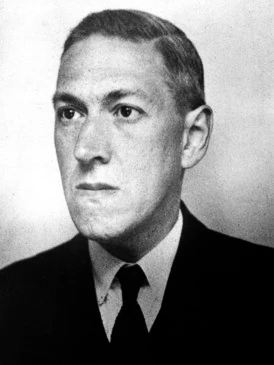
Howard Phillips Lovecraft (H.P. Lovecraft) wrote many essays and poems in his younger career, and was primarily a poet (already Weird) at that time. He only devoted himself more to short stories once the Weird Tales magazine became established in 1923. Among his many poems, we might pick out the one titled “The City” (1919), to see how the Biblical vision of Jerusalem (as ‘a shining city on a hill’) is gradually replaced by a Weird sense of abandonment, cosmic insignificance and all-consuming horror:
On the plazas were standing

A sculptur’d array;

Long-bearded, commanding,

Grave men in their day—

But one stood dismantled and broken, its bearded face batter’d away.


In that city effulgent

No mortal I saw;

But my fancy, indulgent

To memory’s law,

Linger’d long on the forms in the plazas, and eyed their stone features with awe.


I fann’d the faint ember

That glow’d in my mind,

And strove to remember

The aeons behind;

To rove thro’ infinity freely, and visit the past unconfin’d.


Then the horrible warning

Upon my soul sped

Like the ominous morning

That rises in red,

And in panic I flew from the knowledge of terrors forgotten and dead.
In just the short extract above we might see many of the larger themes that Lovecraft explores in his wider work and mythos. Lovecraft fundamentally questions and challenges humanity’s place and importance in the world, quite counter to the Christian or God-centric framework of traditional horror (as per section one of this piece) and the Gothic. The Weird is a truly ‘alienated’ genre, ancient and vast aliens having arrived here long before us. Human civilization, despite its millennia of learning, knowledge and scientific advance, is all but worthless and as nothing in the face of the Weird cosmos.
The Weird originated as a particularly American sensibility, perhaps because the white man was only a relatively recent arrival to that land, a land populated by far older races, with radically different belief systems and even knowledge-systems. And the sense of that vast, perhaps unknowable land can so often be utterly overwhelming, alienating and terrifying. Monstrous. To quote from Lovecraft’s poem “Nemesis” ():
I have whirl’d with the earth at the dawning,

When the sky was a vaporous flame;

I have seen the dark universe yawning,

Where the black planets roll without aim;

Where they roll in their horror unheeded, without knowledge or lustre or name.


I had drifted o’er seas without ending,

Under sinister grey-clouded skies

That the many-fork’d lightning is rending,

That resound with hysterical cries;

With the moans of invisible daemons that out of the green waters rise.


I have plung’d like a deer thro’ the arches

Of the hoary primordial grove,

Where the oaks feel the presence that marches

And stalks on where no spirit dares rove;

And I flee from a thing that surrounds me, and leers thro’ dead branches above.


I have stumbled by cave-ridden mountains

That rise barren and bleak from the plain,

I have drunk of the fog-foetid fountains

That ooze down to the marsh and the main;

And in hot cursed tarns I have seen things I care not to gaze on again.


I have scann’d the vast ivy-clad palace,

I have trod its untenanted hall,

Where the moon writhing up from the valleys

Shews the tapestried things on the wall;

Strange figures discordantly woven, which I cannot endure to recall.
4 Final dark thoughts
In this piece, horror, Gothic and Weird poetry have not been defined as such, as often they are a ‘sensibility’ that exists as much within the reader as within the poem being read. However, I hope that this poetry has been described sufficiently in terms of its various traditions to enable readers to further develop their sensibility. For example, I trust that readers now understand horror poetry is far more than just lots of blood and violence: indeed, in their submission guidelines, most horror poetry magazines actually ask not to be sent work containing extreme violence! In the words of Emily Dickinson, from her poem of 1862:
One need not be a chamber—to be haunted—

One need not be a House—

The Brain—has Corridors surpassing

Material Place—


Far safer, of a Midnight—meeting

External Ghost—

Than an Interior—confronting—

That cooler—Host—


Far safer, through an Abbey—gallop—

The Stones a’chase—

Than moonless—One’s A’self encounter—

In lonesome place—


Ourself—behind Ourself—Concealed—

Should startle—most—

Assassin—hid in Our Apartment—

Be Horror’s least—


The Prudent—carries a Revolver—

He bolts the Door,

O’erlooking a Superior Spectre

More near—
By, A J Dalton
London, UK, August 2025
Notes
Dalton, A. J., book chapter, ‘What is so fabulous about Smaug?’, in Not the Fellowship of the Rings: Dragons Welcome!, edited by Francesca Barbini, 154-67, Edinburgh: Academia Lunare, Luna Press Published, 2022.
Dalton, A.J, book, The Satanic in Science Fiction and Fantasy, Edinburgh: Academia Lunare, Luna Press Published, 2020.
Dalton, A.J., article, ‘Geo-political vampirism: how and why has Western literary scholarship appropriated and then re-mythologised the socio-historical origins of the vampire?’, 2024, https://www.nature.com/articles/s41599-023-02576-z.