
Interview by Jean-Paul L. Garnier for Star*Line 49.1
Speculative poetry is on the rise! 2025 saw the first ever Hugo Award for poetry. SFWA has begun including poets and 2026 will see a Nebula Award for Best Poem. Marie Brennan made history by being the recipient of first ever Special Hugo Award for Best Poem. In 2026 it will be given again, and with any luck ratified as a permanent category. The SFPA celebrates Marie’s recognition in specpo, and we caught up with her to discuss speculative poetry and her historic win.
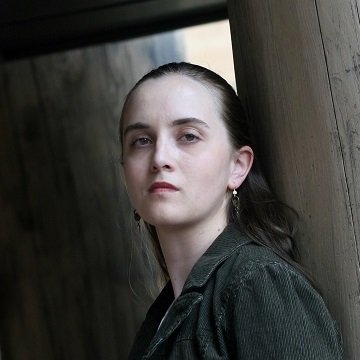
(Photo credit: Perry Reichanadter)
Jean-Paul L. Garnier - Your Special Hugo Award winning poem “A War of Words” is about the power of language and how language can be used as a form of control. How do you believe that poems and stories can be used to empower both writers and readers and to fight back against systems of oppression?
Marie Brennan - Fundamentally, we have to imagine things before we can make them happen. Society isn’t going to change without anyone first seeing the possibility of it being different. Any kind of storytelling – poems, short stories, novels, movies, TV, games, anecdotes told among friends – can introduce people to new ways of being, or the consequences of bad ways. So although it’s easy to feel like we’re shouting into the wind – like nothing we say makes a difference – each piece is a pebble. Together, we can form avalanches.
JPG - On your website you mention that “A War of Words” was inspired by a Haida tale, can you elaborate on this and tell us a bit about how your work in archaeology and folklore inform your poetic language?
MB - I like to read anthropology books for fun and brain fodder – probably not surprising to anybody who’s read much of my fiction! In this case, the book in question was A Story as Sharp as a Knife: The Classical Haida Mythtellers and Their World, by Robert Bringhurst. It’s a study not only of Haida storytelling culture, but of the history of outsider research into those subjects; among other things, that means it’s diligent about saying who narrated the story and what we know about them. Thanks to that, I know the story in question was told by a Haida man named Kilxhawgins – and that’s important to me, that I can trace it to a specific person, when so much folklore (especially from Indigenous people) gets presented like the anonymous creation of a culture as a whole.
As for poetic language, I don’t know if I can blame my folkloric background for my somewhat old-fashioned tastes! I’m a bit unusual in actively liking poetic forms; “A War of Words” may be free verse, but a good half or more of what I’ve written is form of one sort or another. I like the structuring elements those bring to the table, whether that’s meter, rhyme, alliteration, refrains, or some other feature. (You can spot bits of alliteration and such slipped into “A War of Words,” too – obviously those tools aren’t wholly off the table for free verse.)
JPG - You’re fairly new to writing poetry, having begun writing it in 2021. How has your poetry and your perception of poetry changed during this time?
MB - I’ve found, much to my surprise, that I also want to write non-speculative poetry. My interests have always been centered on fantasy and adjacent genres, never straying further afield than a few small bits of non-speculative historical fiction, but now I’m writing . . . literary poems? Poetry is apparently where my brain goes to be angry about current events.
Mind you, I have yet to sell any of those. I don’t think my aesthetic sensibilities really align with the current litfic scene. Some of that scene is indeed that lit’rary word salad I mentioned before, and some of it is too conversationally straightforward for my taste. But it’s fine for me to bounce off certain stuff; I’ve also found modern literary works that I very much like.
JPG - How has writing poetry informed your fiction, and vice versa?
MB - I did technically write poetry before 2021, notably on a handful of occasions when a fiction piece of mine really needed a poem. (Most of those instances were stories set in or inspired by Japanese history, such that the culture around composing haiku or tanka for an occasion played into the narrative.) So among other things, the demands of fiction gave me a bit of an on-ramp to tackling poetry for its own sake.
I also know that I’ve gradually become more aware of my prose over the years. That stood me in good stead when I began writing poetry, because I was already thinking about things like the rhythm of a sentence, or the beneficial effects of a touch of alliteration. Now it’s feeding in the other direction, as poetry nudges me to think a lot more about figures of speech and how much they play into what we consider to be striking or memorable language. Poetry also thrives on word choice that leans into metaphor and wrong-but-right approaches to a subject – and that works in fiction, too! Too much of it can make for extremely dense prose, but grace notes of it do a lot to elevate a story.
JPG - You’ve also written games, how does this unique form of storytelling overlap with poetry, if at all?
MB - The easy joke to make is that much of my game writing has been for Legend of the Five Rings, which is heavily inspired by Japanese history – therefore L5R stories have formed some of the instances where I needed poetry for my fiction! But that’s not really what you’re asking, I think.
When I was in graduate school, RPGs were actually the focus of my studies. I was in the departments of anthropology and folklore, and the latter is where I learned a lot about the role poetry plays in different kinds of society. It can be improvisational, it can be crafted within a set of rules, it can be collaborative . . . sound familiar? Roleplaying games aren’t the same thing as poetry, but I studied them under the aegis of folklore because they, like poetry, are a genre of verbal art.
JPG - What are your hopes for the Poetry Hugo Award’s future, and why?
MB - I’m part of the Speculative Poetry Initiative, which is working to make that a permanent category, as the Nebulas have already done. We were delighted when the LA Worldcon announced that they would repeat the Special Award for poetry – it means I will not be the only person to lay claim to that distinction! (My value as the answer to a trivia question will go down.) It’s a great show of support for poetry having a place in our field.
The SPI successfully passed the first vote at a 2025 WSFS business meeting; if we can get that ratified in 2026, then in 2027 the award will go from being the special one each Worldcon can elect to include, to being a regular part of the lineup. I think that will be a great boost to the poetic corner of our genre. The 2025 Special Award had pleasingly high participation in the voting stats, which I think bodes well for this being a category accessible to a wide range of SF/F fans.
If anybody would like to help out, get in touch!
JPG - What are you currently working on, and what is coming up next for you?
MB - It’s a busy year for me! Alyc Helms and I are collaborating again under the name M.A. Carrick with the Sea Beyond, a historical fantasy duology set in Golden Age Spain; the first book of that, The Eye of Leviathan, will be out in 2026. Then 2027 will see the start of a new solo trilogy of mine, with The Worst Monk in Omnu, a semi-cozy fantasy about a Buddhist-style monk who goes on pilgrimage to try and cleanse their amazingly terrible karma. Apart from that, I continue to write poetry and short stories, worldbuilding essays for my Patreon, and anything else that catches my fancy!
Some truly good information, Gladiola I observed this. “As long as a word remains unspoken, you are it’s master once you utter it, you are it’s slave.” by Solomon Ibn Gabirol.