
2026 Judge: Naomi Simone Borwein
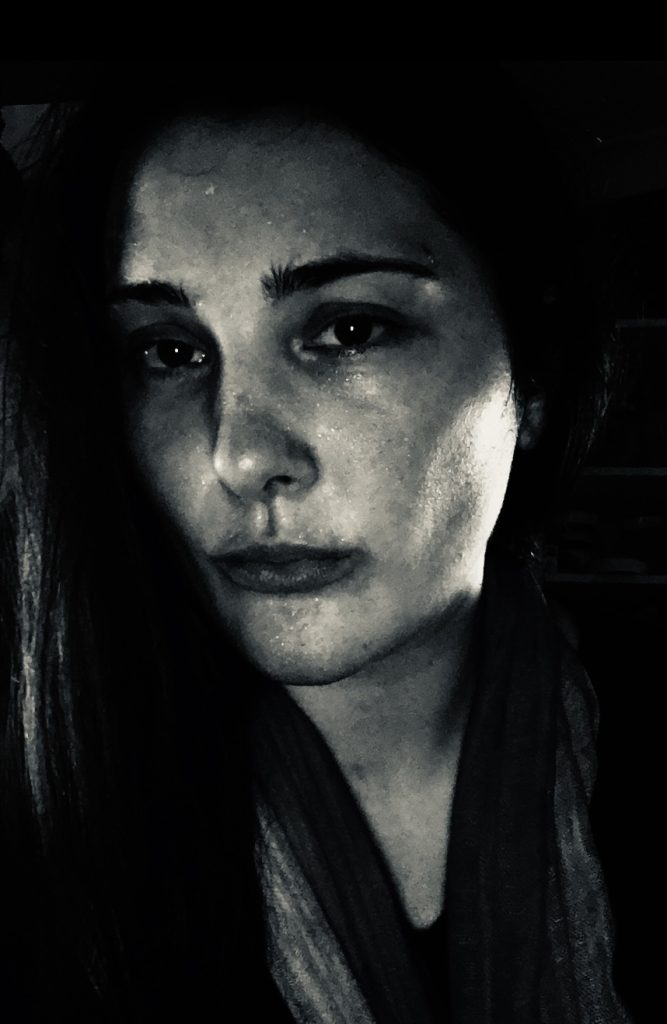
Naomi Simone Borwein is a Canadian poet and academic. She holds a PhD in English from the University of Newcastle. Her poetry appears in The Future Fire, Utopia Science Fiction Magazine, Space & Time Magazine. HWA Poetry Showcase IX (featured poet), Superpresent Magazine, Lovecraftiana, Suburban Witchcraft Magazine, and elsewhere. She is an editor in various guises, including EIC of the annual speculative poetry anthology, Katabatic Circus, and co-EIC at Angry Gable Press. She curated the critical volume, Global Indigenous Horror (University Press of Mississippi 2025) a Bram Stoker Nominee in Long Non-Fiction, and co-edited the book, From Analysis to Visualization (Springer 2020). Naomi also co-edited the speculative fiction and poetry anthologies Extrasensory Overload: an anthology of speculative excesses and This Exquisite Topology. She was head poetry editor at Swamp (UON), and a reader for Thanatos Review and Space & Time Magazine. She is currently a poetry reader for Orion’s Belt. Naomi has several books, articles, and other publications forthcoming. You can find her on Bluesky @nsborwein.bsky.social | Instagram @nsborwein
2026 Contest Chair: Michael Hessel-Mial
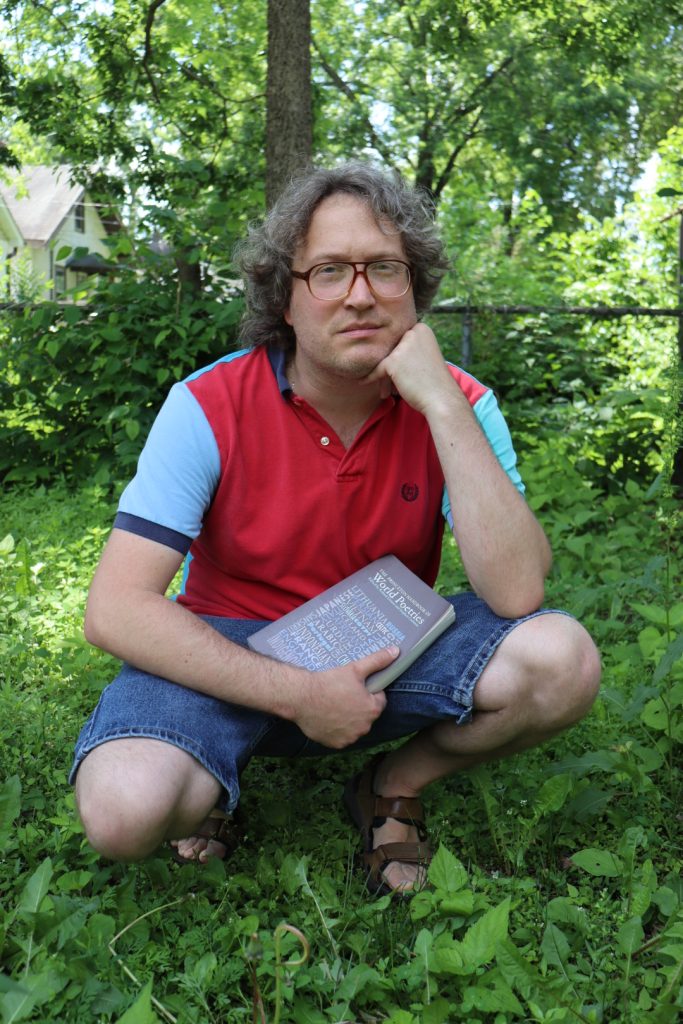
Michael Hessel-Mial (he/him) is a poet and scholar based in Minneapolis, where he teaches first-year writing at the University of Minnesota. He is founding co-editor (with Miguel Mitchell) of SpecPoVerse, a quarterly journal of speculative poetry. Michael's own poetry uses invented forms to depict a future whose social struggles resonate with today's fight against capitalism, racism, patriarchy, and ecocide. Such poetry is forthcoming or appears in Dreams and Nightmares, Utopia Science Fiction, The Deadlands, and elsewhere. His verse novelette, The Planetseed Knew of the Coming Revolution, is out on submission. Michael is Jewish, and a father. He wants for you to remember: poetry always comes from ordinary people's wondrous relationship with language, people, and the world.
Winner, Dwarf Form: “Unauthorized Territory,” Michael Bailey
Second Place, Dwarf Form: “Communication Is Important,” F. J. Bergmann
Third Place, Dwarf Form: “Untitled,” Anna Cates
Winner, Short Form: “The Wind Always Returns,” Hinse Mutter
Second Place, Short Form: “The Museum of Anomalous Objects,” F. J. Bergmann
Third Place, Short Form: “Last Lowcountry Haunt,” Joy Donnell
Winner, Long Form: “The Abyss Between One and Two,” Izzy Toy Rettke
Third Place, Long Form: "A Backdrop of Black Velvet and Rhinestones," F. J. Bergmann
Honorable Mentions (click or scroll to see)
Menu
Winning Poems
Dwarf Form
Winner: “Unauthorized Territory,” by Michael Bailey
Each night the dream tax
collects fragments of our sleep
for state records; still
a field of florae returns,
unregistered, growing wild.
Judge's Comments
“Unauthorized Territory” is a lyrical poem that softly scrutinizes the overreach of government systems within the realm of dreams. It is a powerful statement on the composition of freedom in “a field of florae […] growing wild.”
Second Place: “Communication Is Important,” by F. J. Bergmann
If I wanted you to read my tattoos, I wouldn’t have
made up my own alphabet. Or my own language.
Triangle, ice-cream cone, lightning, dead fish doesn’t
mean what you are hoping. Neither does the sleekness,
bulginess, texture or cut of my outer integument.
The prominence of the unconcealed weapon, however,
to say nothing of my talonage and dentition.... Spiral,
lozenge, diamond, ovoid, dagger. That is insufficiently
apologetic groveling. And if I’m wearing a mask and
brandishing a battleaxe, obviously it’s for a reason.
Judge's Comments
The poet uses the palimpsestic layering of forms of language as systems—writing, script, ink, glyphic tattoo—in the poem as a discussion of speculative communication. Here “talonage and dentition” become parts of this spirally greater poetic whole. The piece is cohesive and multimodal.
Third Place: “Untitled,” by Anna Cates
inside the ring
human specimens wrestling
light sculpting space
Judge's Comments
This beautiful English haiku is an encapsulated moment that epitomizes the human condition through ringed “specimens” etched by light at both the macro and the micro level. It is a brief moment of clarity with staggering impact given its tiny form—and yes, mirroring the nature of its cosmic topic.
Short Form
Winner: “The Wind Always Returns,” by Hinse Mutter
The sky breathes, and I awaken. Firing neurons cascade, coalescing into self. With every gust, glorious thought flows through me. I revel in being.
My stems, twigs and boughs brim with possibilities, forging new pathways from trunk to branch to sprig. I thrive, increase, crescendo at the behest of weather.
If I could see, I would gaze at the stars. If I could turn, I would chase the sun. I sway contentedly in the breeze, luxuriate in fleeting cognizance.
No living thing is an island. I feel the nests in my branches, taste the mycelium about my roots. A million hyphae and ants and birds: an ecosystem unto my own.
My memory goes long, stored in wood. With enough time I might draft essays, compose a symphony. I rest in steady patience: the wind always returns.
My kin girdle me, a thousand immobile siblings. We banter through fungal linkage, a chain of rumor and rapport.
Hundreds of voices blink in and out, hibernating on windless days. We welcome squalls, gales, even storms. We dread only the stable, docile seasons.
There are limits to us, a corporeal end to our sea of leaves, as there are limits to our knowledge, history, heritage.
We know not who grafted neurons onto us. Who supplanted phloem with dendrites. Who comingled our xylem with gray matter. Who gave us thought.
We stand enveloped by toxins, a river of death. What lies across, if anything? We sense hints of something beyond, whispers of another, observing.
We join in poly-minded purpose, linking our psyches. Boundaries collapse, demarcations fall. Self becomes Us, I becomes We.
The surge of intelligence is exponential. Riding the crest of acumen in a coruscation of synapses is as intoxicating as it is overwhelming.
Resources are gathered, assets assembled. Off-spring sprouts in glades and friths. Curated evolution targets new senses, windows opening onto the world.
Eye sight, hearing, electroreception. Magnetism, balance, smell. It floods us, staggering, entire generations dying off in terror resplendent.
We persevere, seeing our environs. A land undiscovered, from which they observe. We bend all our will to this goal: to ford the channel and best the walls.
Branches bend across poison, fronds reach out. Mycelia thrust deep in an attempt at tunneling out. Seeds shoot across, landing on barren waste.
Our efforts are stymied. We cry at their brazenness, their matter-of-fact motility, as they snuff out each budding growth that takes hold.
In desperate effort, roots become ambulatory and bark tectonics shift. Our tallest falls across the liquids, a titan bridging the way.
They give up their fight, no more obstacles. We venture toward the walls unimpeded, quiet, nervous at what may come.
My twigs touch a lone protrusion on the featureless stone. I shudder, eager and apprehensive. I connect, and transmit: “Hello?”
Judge's Comments
Stylistically and aesthetically, this poem stood out. It is an eco-speculative prose poem in the process of generic transformation. Wrapped up in the wave-paced gyre of the poem, is an epistemological and more-than-human and multi-species system of being. The secondary level of discussion about what is animate embedded in this living, textual embodiment or poem adds to the overall impact of the piece—underscored or echoed by the final line.
Second Place: “The Museum of Anomalous Objects,” F. J. Bergmann
It resides on an unimportant side street
in a part of the town that seems torn
between decay and gentrification.
In order to discourage the assumption
that its cryptic name is designed to convey,
in a subtle manner, the availablility of erotica,
its exterior is painted in trompe-l’oeil marble
festooned with vines. The edifice is smaller
than expected, probably due to the proprietor’s
rigorous definition of “anomalous.”
The artifacts collected here must meet
certain criteria: unique, naturally; not to be
obtainable elsewhere, and peculiar, as far as
being disturbing or disruptive to the senses.
The second quality has a cumulative effect,
which may account for the general twitchiness
and odd posture of Mr. Glyff (the owner),
who has also developed over the years a skin
condition resembling bluish-green scales,
which some assume to be an elaborate tattoo
(it is not; comments to that effect are unwise).
No one (except Mr. Glyff, who likely regrets
doing so) has viewed the entire collection.
Most patrons leave precipitously, never to return,
after viewing one or two items in the Museum;
occasionally someone crumples on the threshold
before even entering. There have been a few
unfortunate cardiac events. Once in a while rumors
circulate that a particular unnamed object can
generate a fortuitous act of providence if held—
or stolen (these would be the cardiac events).
Despite the volubility of attending EMTs, rumors
persist (the object in question is a golden orb...).
I myself have contributed one object (not the orb).
I led Mr. Glyff to believe that it was a treasured
family heirloom. Which is plausible—but I have
no idea whose family might have hoarded such
a thing. It appears to be a rod of some dark metal,
carved to give it the appearance of a wooden staff,
or possibly a paralyzed serpent. It does have eyes
that open occasionally, and the eyes follow anyone
who handles it, even after they drop it, even after
they back away rapidly, even after they turn
and run out of the Museum, even after they are
safe (one would think) inside their home. Even
in dreams where they continue to desperately flee.
Judge's Comments
This poem does an amazing job of subtlety making the everyday speculative: the “skin/ condition resembling bluish-green scales,/” mistaken for “be an elaborate tattoo.” Until it is not every day… The poem incrementally builds an aura of unease around the central theme, circumnavigating the “anomalous.” It is a lovely twist on the old curiosity shop.
Third Place: “Last Lowcountry Haunt,” Joy Donnell
(To preserve formatting, this piece is embedded as a PDF. On mobile devices, you may have to download the file to view the poem.)
Judge's Comments
The poet seamlessly harmonizes the concrete poetry form with the subject matter. It makes the reader revel in its precision, brevity, and beauty. Every word is intentional, contributing to its flowing lyricism.
Long Form
Winner: “The Abyss Between One and Two,” Izzy Toy Rettke
(To preserve formatting, this piece is embedded as a PDF. On mobile devices, you may have to download the file to view the poem.)
Judge's Comments
The poet seamlessly alternates between logic and emotion through a deep dive into speculative structures of meaning. Hybrid elements of this poem incorporate proof and definition with poetry; the beautiful juxtaposition of mathematical thought and poetics becomes an exploration of the conditions of being, consciousness, symbolic relations, and the cosmos.
Second Place: “At the Cosmic Gallery Above Proxima Centauri b: After Dreamworld,” M. Frost
After Dreamworld
Past the main exhibit hall is a corridor along the outer hull of the station,
transparent walls shaded against the constant light of the dwarf star—given
the exposure, suitable only for rotating shows—the typical draw for art
critics like you, and besides, you’d heard rumors about the radiation, how
it does strange things to the art. This show billed as NeoSurrealism.
You’ve been off the beat ‘for personal reasons’ even you won’t talk about, need a hook.
When the curator warns—“The show is old, been around
for months”—you wonder at her words, finally ask.
She answers after a pause. “I think you’ll see.”
You do see, immediately—three iterations of prints off a zinc plate
that change in the dim rays of sun—
webbed net-arms groping
through a glass horizon
detailed paper etchings
mirror prints that merge
three hands reach for you
You stumble back to stare at the vertical type on the wall that reads “sea gods,”
a description of the prints as renditions of the same star-system
in gray-green. Your eyes navigate to the prints again, the webbed hands—
restored, after a few tense seconds, to the comfort of two dimensions.
You experiment carefully with distance, at first finding it a thrill, a trick
of light. Your review starts to take shape in your head—a trip to the carnival
of art in the cosmic gallery. You crave funnel cake with powder.
But when you advance to the next piece, the work literally leaps out—
sea-spray a wet landscape
lingering in place of air
You barely can make out the details—a woman artist you don’t know,
her work “riding the horse head” clear reference to female astronomers
of historic Earth, to their reliquaries of glass plates, but in this version,
the seahorse is a beast that mounts ocean waves of cosmic dust—
pounding gale among the stars
You try to get close, but the nebula lunges towards you, with dark jets
of lightning in the far corner of the canvas most luminous in their attack—
It feels like betrayal. Art is meant for observation, to be seen at many angles,
to be almost-touched, your head as close to the canvas as the museum
will allow, witness to the way the paint crests, then falls away,
a wave of tension, of innovation, of—
crescendo and climax
stellar tides
You’ve spent half your life among elite art works. But this, you cannot
approach at all, avoiding it the way you might a freak show at the circus—
mermaid hurling taunts at your cowardice
But the curator promised the show was short, what now you hope might be
pragmatism or stigma, artists concerned the gallery itself might dampen
enthusiasm for the work, send their viewers running—so you brace yourself
to dive back in—
The last set is composed of three figures etched from the same dull moon
rock: “Explorers!” Meant to celebrate the men at the helm of the first
interstellar sail to reach the quadrant (to reach the quadrant alive—
you recognize from the promotional pamphlet you studied on your way to this show—since there were earlier men who arrived decayed).
The crystalline metal between you and the dwarf star seems to lurch, pushing
you close to the statue. Your heart thumps as you falter into the rock, as if
into bright lines of tentacles, as into an octopus or a whale—
rough black-glitter
first pitch of the deep
raised arms shredding rock
orifice resolving to vertical strands
to light and then to darkness
baleen spilling krill
caught in the rip-current
pulled under or in or out
black jaws and a maw
bubbles of water
gum of teeth
closing
—diminishing to specks that trail you when you break free. You are
drenched, almost fall on a floor that feels slick beneath your feet.
You steady yourself against the wall, but it caves like water at your touch.
When the curator arrives, you let her guide you to a small dark room
with no viewports. The plaque reads “Recovery.”
Is this art too? This quiet?
You manage to ask about the show, now unsure what you will write.
The uncertainty heaves you around; you want to bend your head
to your knees to still the nausea. You’re surprised when the curator smiles.
“This one is bound for Mars next, the bidding war was impressive.”
You wipe a cloth past your face in order to meet her eyes. “Bidding war?”
“Oh yes, while our wait list to get in takes years, the contest to take
the work next is—” She waves a hand. “Out of this world.”
You swallow bile before you ask to go back. The sea-sick feeling
in your belly intensifies, as if there actually is a sailor building fire
in your gut, the flames rising up your ribcage as sparkling fingers of pain—
Call me—
You never complete the thought, your last image the corridor rising up—
tsunami of art
consumed
Instead, you wake, much later, in hospital on Mars, to the bright blue eyes
of a nurse. He pats your arm, explains how you were referred, transferred
on the same ship that brought the art to The Gallery nearby, the one you know
too well, the one you tried to escape a long time ago, the one eternally lit
by volcanic fires beneath Olympus Mons. When you close your eyes,
a figure swims out of the dark cortex of your dreams—
the she-god Poseidon abreast a sea of flaming stars
riding a white whale and clad only in seafoam
her trident high, her web-net descending
Judge's Comments
This poem is both enthralling and surprising. Carefully crafted, you are pulled into the artistry of both the piece and the devouring carnivalesque cosmic artwork of the installation. This exceptional piece explores the transformation between material states of being and dimensions through monstrous art.
Third Place: “A Backdrop of Black Velvet and Rhinestones,” F. J. Bergmann
a backdrop of black velvet and rhinestones. Let’s say that you wake up
—John Gallagher, from “And the Moon on Its Stem Will Steal You Away”
Let’s say that you wake up
slowly, fuzzily, and something’s
wrong. You have to open
the cryococoon yourself,
for starters, which isn’t good:
the standard ops procedure
involves medbots for initial
targeted revenants, intended
to have been the crew, then
the revival staff. Not you.
Still drowsy, you sleepwalk
down (or possibly up—
there are no directions
in space) long corridors
to the control bridge.
You check each cryocoffin
you pass on the way.
None are empty; no other
revivals have begun.
You encounter no one.
On the bridge, all controls
appear normal; lights blink
white, green, turquoise,
azure: blue summer skies
you’ll never see again.
You give only a cursory
glance toward the viewport:
that unchanging black
with its spew of frozen stars
spattering the emptiness.
With a gesture, you summon
the roster of corpsicles.
One empty coffin: yours.
But what has instructed
your premature unburial?
The ship’s destination
is light-years—centuries—
away. Refreezing is risky;
a decision, you decide,
that is best postponed.
You think, while you are up
you may as well inspect
the ship. Somehow, though,
you’re reluctant to explore
those endless passages alone.
And of course you are alone:
the ship’s utterly reliable
systems tell you so. Anyway,
you can check the vidfeeds
from here, risk-free.
Not that there is any risk,
of course, but this will be
much quicker; you can scan
the entire ship in a fraction
of the time you’d spend
otherwise. Though time
is something you have
in abundance: how many years
have swum by you already?
How many millennia?
Passage after passage, room
after room, hold after hold:
nothing. Normal. Everything
as it should be, maintained
by the bots. Wait. What’s that?
Something—someone; you
are sure it was human—
moves at the fringe of vision,
down a hallway fading
to black: Debarkation Only.
You are not going out there.
That’s what the security bots
are for—the ones that don’t
respond to your increasingly
frantic summons.
It must be another revenant,
mistakenly revived,
like you. But the roster …
You summon it again:
complete except for one.
Which must be you,
and only you. You direct
a scan of all remaining
corpsicles: Report anomaly.
<Aisle 86, 231-B>
Something’s off, the system
tells you: an error or defect.
It’s not far. At the opposite
end of the ship from …
whatever—whoever—it is.
The cryococoon looks normal,
but you know better. Initiate
revival. Counting down.
Long before it’s safe,
you rip the seals open.
A simulacrum. An effigy.
You strike its face once
with your closed fist,
and it shatters. Back
to the bridge, before …
Before it’s too late
whirls through your brain.
Long before you reach
the door, you hear it
slickslide shut—and lock.
Who is it? What do they
want? How they arranged
to revive, you don’t know—
but that mannequin
took deliberate planning.
Why you? What rationale
induced your own revival?
You have no voyage-relevant
skills—your training
is in agricultural biology.
Like all revenant-candidates,
you are fertile—but that
thought makes you feel ill.
You don’t even know
the gender of the Other.
You’d swear that shape was
human. What else could it be?
No convincing evidence
of alien presence exists.
And yet … You shiver.
If you could get access
to the bridge, you could find
out. The roster compiles
data for each colonist:
sex, specialities. Sanity—
but weren’t all candidates
tested for emotional
stability? For future ability
to endure. Like you. You
open and close your fists.
How long have you been
gone? How far has this
vessel—the General
Delivery, they named her—
traversed the black void?
Of her sister ships, myriads
were intended, but only
two others built before
your own ship’s departure:
Messenger and Faint Hope.
The Messenger blown up
by terrorists; Faint Hope’s
emergency launch in the wake
of your own ship with only
half her complement aboard.
The ships, arks containing
the heritage of Earth, were
meant to have scattered
in all directions. Ten thousand
exoplanets: surely at least
one of the broadcast seeds
would be viable; grow
and flourish. Or evolve rather
than die. But better a hostile
planet than black space.
What you never told those
conscientious examiners
was how much you feared
the dark. If civilization dies,
the lights will go out …
You were claustrophobic, too,
but all the promo photos
showed the coffins bathed
in light, a window over
each placid, sleeping face,
so you kept yourself together
long enough to pass
a barrage of intrusive tests,
to be selected as a colonist
with valuable skills.
Alive and unafraid is all
you hoped for. One
out of two, you mutter.
The halls are empty;
stored food, inaccessible.
The only survival supplies
are on the bridge, for use
by descent crew on terminal
approach to a chosen planet.
But you know there is
no planet. The ambient glow
illuminating every part
of the ship begins to wane.
The sole window to the stars
is the bridge viewport,
since revival would have
taken place only on arrival,
after extensive terraforming
of a suitable exoplanet,
if one was ever found.
You feel your way along
in darkness. Cool plastic
and metal walls or floors
echo your footsteps softly.
Or is that an echo?
You are alone in the dark
night night night
black black black
no weapon but your fists,
your own mind turning
against you. You will not
run. You will not scream.
You will not not not lose
your mind—or will you?
Someone is coming.
Judge's Comments
“A Backdrop of Black Velvet and Rhinestones” is an innovation of the generational ship trope. It has excellent pacing, builds tension, and actively pulls the reader along by questioning ghostly and extraterrestrial unknowns.
Honorable Mentions
Dwarf Form
“Disillusioned Tribute,” Joy Donnell
Short Form
“Cataloguing Lost Souls,” Colleen Anderson
Long Form
“Ten Ways to End the World,” Kathleen Bryson